


Atopic skin in babies is one of the most common concerns among parents of newborns and young infants. It is characterized by dry skin, redness, itching, and sometimes small cracks - especially in the creases of the arms, legs, and face. Although there is no definitive cure, symptoms can be significantly reduced with simple daily care, starting with the choice of fabrics that touch the baby's skin every day.
What is atopic skin in babies?
Atopic skin (or atopic eczema) results from a more fragile skin barrier, which loses moisture more easily and becomes more vulnerable to external irritants. It is common in babies with a family history of allergies, asthma, or rhinitis, and tends to manifest in the first few months of life.
The most common signs include:
- Dry, rough skin to the touch, especially on the cheeks, elbows, and knees
- Redness and irregular spots
- Visible itching — the baby rubs against the sheet or clothing
- Skin more sensitive to contact with synthetic or rough fabrics
Because fabric makes a difference for atopic skin
In conventional textile processing, chemical bleaches, synthetic dyes, and finishing treatments are often used. For an adult, the impact is minimal. But for a baby with atopic skin, whose skin barrier is already compromised, prolonged contact with these residues—especially during sleep, when the skin is in continuous contact with towels, cloth diapers, and sheets—can worsen irritation.
Certified organic cotton: the foundation of any anti-irritation routine
Organic cotton is grown without synthetic pesticides or chemical fertilizers, and its processing follows stricter standards for dyes and finishes. The certification to look for is GOTS (Global Organic Textile Standard), which guarantees textiles free of harmful substances throughout the entire production chain, from fiber to the final garment.
For babies prone to eczema or reactive skin, opting for GOTS-certified textiles in everyday use (towels, cloth diapers, bedding) is one of the simplest and most effective measures to reduce friction and exposure to chemical residues.
Bath routine for atopic skin
Bathing is one of the moments with the highest risk of irritation, but also an opportunity for care if done correctly:
- Warm water, never hot Hot water strips the skin of its natural oils and worsens dryness.
- Short showers — 5 to 10 minutes is enough
- Gentle cleaning products — no soap, no fragrance, pH neutral
- Dry without rubbing — Atopic skin cannot tolerate friction; it should be dried by pressing lightly (the “pat dry” technique)
- Moisturize within the first 3 minutes after showering — This is what’s known as the “golden window,” when the skin is still damp and absorbs moisturizer better
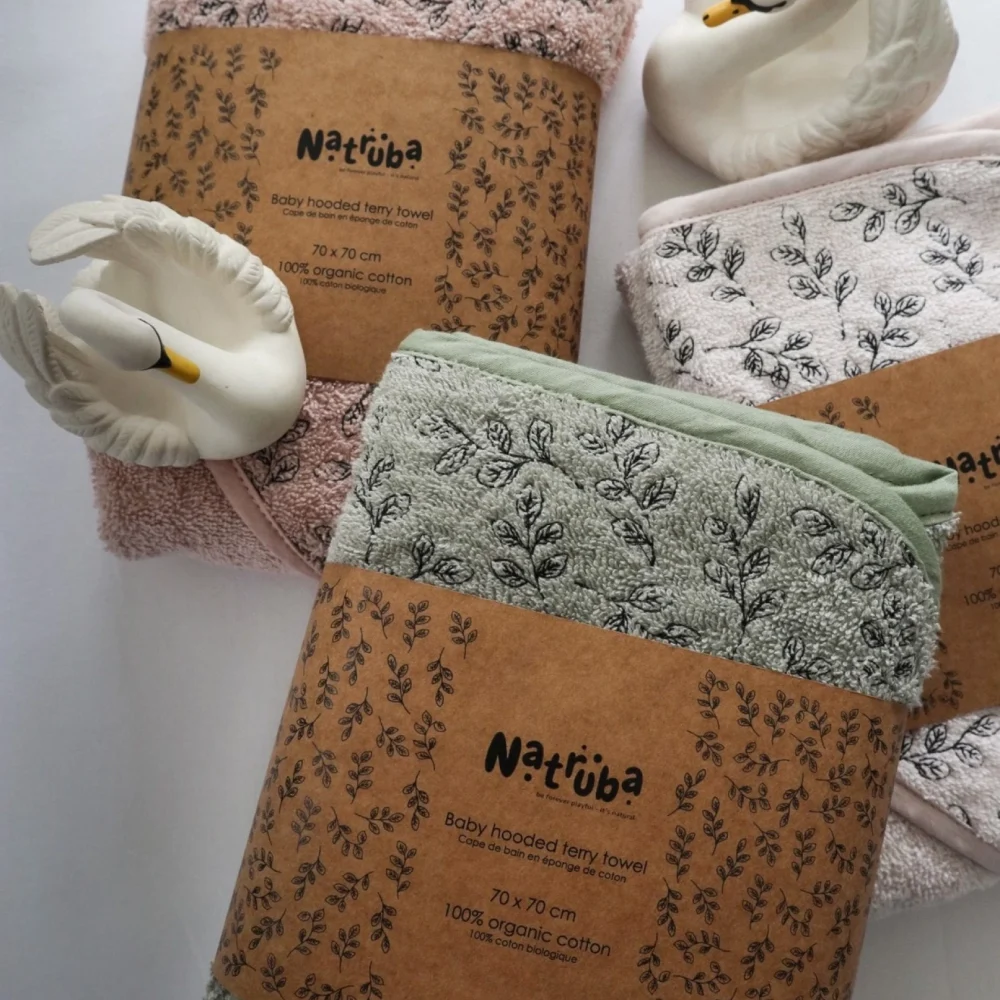
The towel you use right now matters more than it seems. A towel made of rough cotton or one with bleach residue can undo all the care you put into your routine. Our GOTS-certified organic 100% terry cotton hooded bath towels—available in the following versions Baby Hooded Towel - Cream and green — were designed specifically for this moment: soft, highly absorbent, and free of harsh chemicals, they help dry delicate skin without friction or irritation.
Cloth diapers and continuous skin contact
Cotton muslin swaddles are some of the textiles with the longest direct skin contact time with a baby — used for wiping, covering, as a burp cloth, or even as a light sheet. If the baby has atopic skin, this repeated contact makes the fabric an important choice.
Ours Organic cotton muslin swaddles (2-pack) — also available at green version — They are made from 100% certified organic cotton, without optical brighteners or synthetic finishes. They are soft from the very first use and become even softer with each wash.
💡 Practical tip: Always wash muslin cloths and towels at 40°C before first use to remove packaging residues and pre-soften the fabric. Avoid fabric softener—it reduces absorbency and can leave residues on sensitive skin.
Other measures that help manage atopic skin
- Daily Hydration — Even without visible flare-ups, atopic skin benefits from emollient cream applied 1 to 2 times a day
- 100% Cotton Clothing — Avoid synthetic fabrics or wool that come into direct contact with the skin
- Short nails — to reduce injuries caused by scratching
- Stable room temperature — Excessive heat makes the itching worse
- Aggravating circumstances detection — Some babies react to scented detergents; opt for fragrance-free and dye-free detergents for washing clothes and cloth diapers
When to See a Pediatrician or Dermatologist
Mild atopic skin can be managed at home with the above care. However, you should seek medical attention if you notice:
- Open sores with pus or yellowish crusting (possible infection)
- Itching that persistently prevents the baby from sleeping
- Large areas of affected skin that do not improve with hydration
- Fever associated with skin lesions
Frequently Asked Questions
Does a baby's atopic skin disappear on its own?
In many cases, symptoms lessen significantly by 2-3 years of age as the skin barrier matures. Some infants continue to have more sensitive skin into childhood, but the intensity tends to decrease.
Can I use fabric softener on muslin diapers and baby towels for a baby with atopic skin?
It is not recommended. Fabric softener leaves a film that reduces fabric absorbency and can contain perfumes and chemicals that irritate sensitive skin. Opt for a mild, fragrance-free detergent instead.
What fabric is best for babies with eczema: conventional cotton or organic?
Certified organic cotton (GOTS) is the safest option, as it eliminates pesticide residues, bleaches, and synthetic dyes commonly found in conventional processing—factors that can aggravate irritation in already sensitive skin.
How often should I moisturize my baby's skin with atopic dermatitis?
The ideal is to moisturize at least once a day, and always after bathing, within the first few minutes while the skin is still damp.