



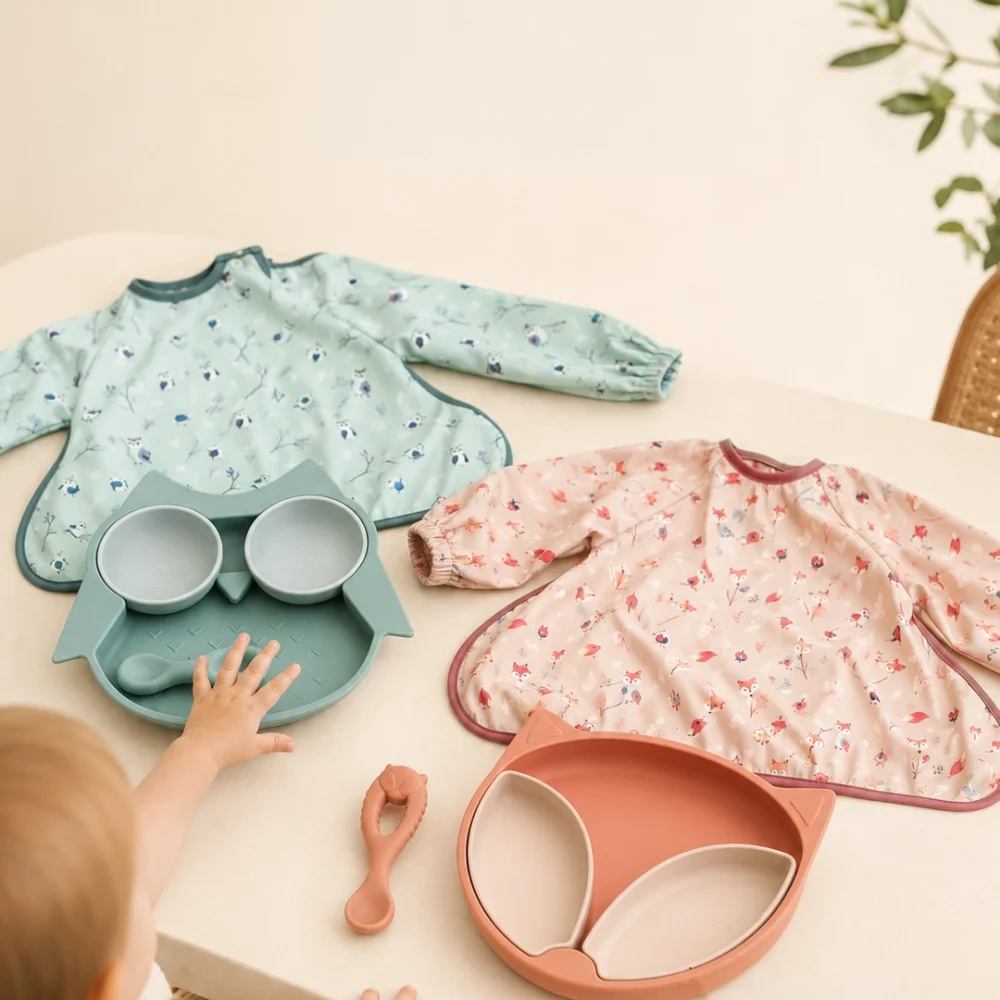
Food introduction is one of the most special and at the same time most confusing phases of the first few months. This guide brings together the essentials to get you started with confidence, whether you’re using baby led weaning (BLW) or not, and always keeping your baby’s safety in mind.
When should the introduction of solid food begin?
The general recommendation is to start around 6 months, when the baby shows signs of readiness. Until then, milk (breast milk or formula) remains the main food. Each baby has their own rhythm, so always confirm with your pediatrician before starting.
Signs that your baby is ready
- Stay seated and keep your head firm.
- Shows interest in food and takes objects to his mouth.
- He lost the reflex of pushing everything out with his tongue.
- He starts making chewing movements.
BLW or formula: which to choose?
There is no single answer. No Baby-led weaning (BLW), The baby eats food in pieces of suitable size by exploring textures and flavors at their own pace. popes, You offer purees by spoonful, with a more gradual control of the quantities. Many families take a mixed approach, and both are valid. The important thing is to offer variety, respect the signs of hunger and satiety, and keep the meal a quiet moment.
First foods to be offered
It starts with simple, soft, and easy-to-grasp foods or foods that can be mashed: cooked vegetables (carrots, sweet potatoes, pumpkin), ripe fruit (banana, pear, cooked apple), and cereals. Introduce one food at a time and gradually increase the amount, including good sources of iron, which is important at this stage.
Safety: how to reduce the risk of choking
- It offers food always with the baby sitting and never alone.
- Cut round foods, such as grapes and cherry tomatoes, into quarters lengthwise.
- Avoid whole nuts, hard foods, and large, firm pieces.
- Learn the difference between the vomiting reflex and choking, and consider taking a first aid course for babies.
What you need to get started
A good start is made easier with the right materials. At Baby Kangaroo, we choose safe, BPA-free products designed for this stage:
- Soft spoons fox and owl, Soft on the gums.
- Choo soft silicone spoon, Ideal for the first popes.
- Easy-to-clean trays and dishes with a suction cup for less mess at the table.
See everything in ours category of food introduction.
Download our free guide
We have prepared an introductory food guide in PDF format, with practical tips and meal ideas to help you get through this phase. Explore the products transition to solid foods and join our newsletter to receive it.
Frequently asked questions
At what age should food introduction begin?
As a general rule, around 6 months, when the signs of readiness appear. Always confirm with the pediatrician.
Can I do BLW and solid foods at the same time?
Yes. The mixed approach is common and allows the autonomy of BLW to be combined with the comfort of nappies.
What foods should I avoid in the beginning?
Avoid honey in the first year, added salt and sugar, hard foods, and pieces that increase the risk of choking.
Do I need special equipment?
You don't need much. Soft spoons, practical plates, and suction cups make meals simpler and safer.
This content is informational and does not replace the follow-up of your pediatrician or a healthcare professional.