



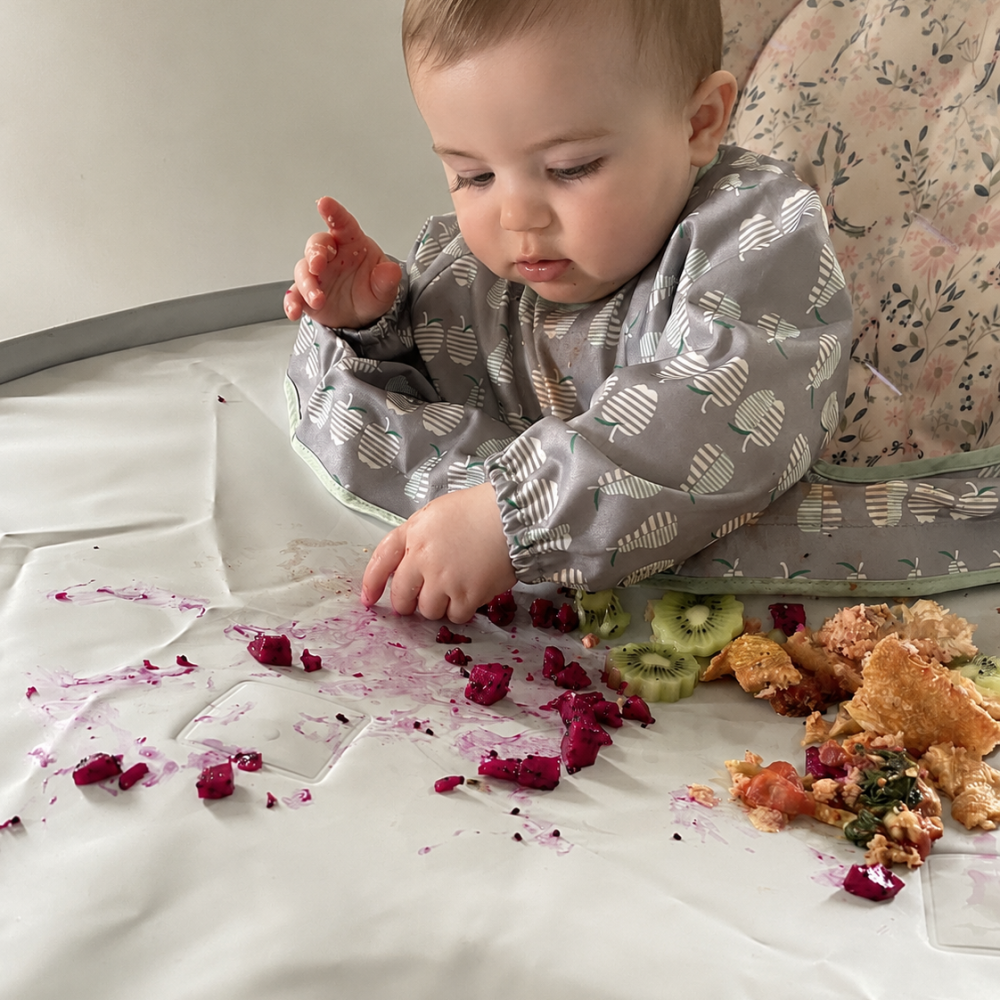
The introduction of solid foods is one of the most important – and also most challenging – phases in a baby's first year of life. Between doubts about when to start, which method is most suitable (traditional, BLW, or mixed), and how to distinguish a simple gag reflex from a real choking situation, it's normal for parents to feel they need support.
Thinking about this, Baby Kangaroo prepared this Introduction to solid foods guide complete and free, to accompany mothers and fathers at every step of this journey. Throughout this article, we answer the most frequently asked questions on the topic and, at the end, you can download our exclusive ebook — with a preparation checklist, guide to safe food textures and cuts, allergen introduction calendar, a two-week mini-menu, and a printable checklist with the first 50 foods.
Whatever method you choose, this guide was created to give you confidence and clarity in the decisions you'll make at the table with your baby — no rush, no drama, one step (and one spoonful) at a time.
When to Start Solids
The most consensual recommendation is to start offering foods other than milk around 6 months of age, provided that the baby shows all the signs of readiness. The calendar alone is not enough — it is important that the baby's development keeps pace with this step.
Signs that the Baby is Ready
- Sit with support
- Good head support (neck control)
- Picks up objects with good coordination
- Lost the extrusion reflex (no longer pushes everything out with their tongue)
- Show interest in the food on the table.
Why Not Expedite the Process
Starting too early may bring a higher probability of choking, an increased risk of food allergies, nutritional deficiencies, and gastrointestinal changes. Respecting the baby's pace is not delaying anything – it's making the whole process safer.
The Different Methods of Introducing Solid Foods
There isn't one single right way. There are different approaches, all valid—the important thing is to know them and choose what makes the most sense for your family.
Traditional Method
Start with soft foods — soups, purees, and mashes — offered by spoon by the adult, always respecting the baby's hunger and satiety cues. With progressively evolving textures, it's a perfectly current approach.
Baby-Led Weaning
In this method, the baby is in charge: self-feeding and autonomy from day one, with foods presented for them to explore and eat independently. The BLISS protocol adds further guidelines to ensure nutritional balance and safety.
Mixed Method
Spoon-feeding and baby-led weaning? Many families combine the two approaches. It doesn't have to be all or nothing — it has to be yours.
How to Prepare Baby's First Meal
Whichever method you choose, the destination is the same: to progressively arrive at complete meals with various food groups and a source of fat. Think of it like building a team:
- Fruit or vegetable — the color and vitamins
- Cereals, tubers, or legumes — the energy for exploration
- Protein — meat, fish, or eggs, essential for growth
The finishing touch: a source of good fat, like a drizzle of olive oil.
Textures: From Purees to Chunks
Babies don't learn to chew with purees; they learn to chew by chewing. There's an ideal “chewing window” between 6 and 9 months, when accepting new textures is more natural.
How to Advance in Textures
- Grind less and less — switch to the crushing fork
- Use less and less water in porridges and purees
- Introduce lumpy consistencies and soft chunks
- I evolve a little bit every day, at the baby's pace
3 Golden Rules for Safe Puddings
- Grip test: Can you crush food between your thumb and index finger?
- Little hand test Can the baby reach it by themselves?
- Without balls Grapes, cherry tomatoes, and blueberries are always cut lengthwise into quarters.
How to Cut Food by Age (BLW)
The way you prepare each food is what makes it safe. The rule changes with age:
From 6 to 9 Months
Large sticks, the size of an adult finger, for the baby to grip with their palm (they don't have a pincer grasp yet). Always leave a part sticking out to hold.
From 9 Months
Smaller pieces, the size of a pea, now that the pincer grasp (thumb + index finger) emerges.
Round and slippery foods (grapes, cherry tomatoes, blueberries, olives): always cut lengthwise, into quarters — never whole or sliced.
Hard and crunchy foods (carrot, apple, celery): steam until tender, or grate very finely.
Always avoid: Whole nuts, popcorn, candies, and hard, raw foods — choking hazard regardless of cutting.
Safety at the Table: Vomiting Reflex vs. Choking
Choking is one of the biggest fears for those caring for a baby—and knowing how to distinguish between these two situations can change everything.
Vomiting Reflex (Normal and Protective)
The baby might cough, make faces, stick out their tongue, or even vomit a little. They make noise—and that's a good sign. What to do: stay calm and don't interfere, never pat their back or try to remove the food with your fingers.
Real Choking (Emergency)
Airway obstruction: the baby becomes silent, cannot cough or cry, and may change color. In this situation, it is essential to act immediately with disobstruction maneuvers and call 112. Pediatric first aid training is strongly recommended before starting food introduction.
When to Introduce Allergens
Current science is clear: delaying does not prevent allergies. All major allergens can be offered from 6 months, as soon as the baby starts solids.
The introduction window is between 6 and 12 months, and including them in the diet 2 to 3 times a week is the most effective way to reduce allergy risk. Stopping for weeks can cause loss of already developed tolerance.
Key Allergens and How to Introduce Them
- This: well-cooked, since 6 months
- Peanut in fine/diluted paste
- Nuts ground or paste
- Fish boneless, well-cooked
- Seafood well-cooked, shredded
- Dairy products yogurt/cheese (cow's milk as a drink only after 1 year)
- Wheat/gluten: bread, dough, oats
- Soybean Tofu, well-cooked edamame
- Sesame diluted tahini
Golden rule: Introduce one allergen at a time, with 2 to 3 days in between, so you can identify any reactions. In case of signs like skin rashes, swelling, vomiting, or difficulty breathing, call 112 immediately.
Download the Complete Guide to Introducing Solid Foods (Free)
We've gathered everything you need to know about this stage — readiness signs, methods, textures, cuts by food, table safety, allergens, and even a two-week mini-menu with practical suggestions — in a single free document, for you to consult whenever you need.
What you will find in the ebook:
- Complete checklist to start with confidence
- Comparison of the different methods (Traditional, BLW, and Mixed)
- Visual Guide to Safe Cutting by Food Type
- Allergen introduction schedule
- 2-week mini-menu with simple recipes
- Printable Checklist of the First 50 Foods
Introduction to Solids Guide: Everything You Need to Know (with Free Ebook)
Every baby has their own pace, and respecting it isn't delaying anything — it's making the entire process safer and happier. With clear information and the right tools, starting solids can be a phase of calm discoveries, for both the baby and you.
At Baby Kangaroo, you'll find everything you need to accompany this stage: plates and cutlery designed for baby's independence, practical bibs, and complete kits to make every meal simpler.