



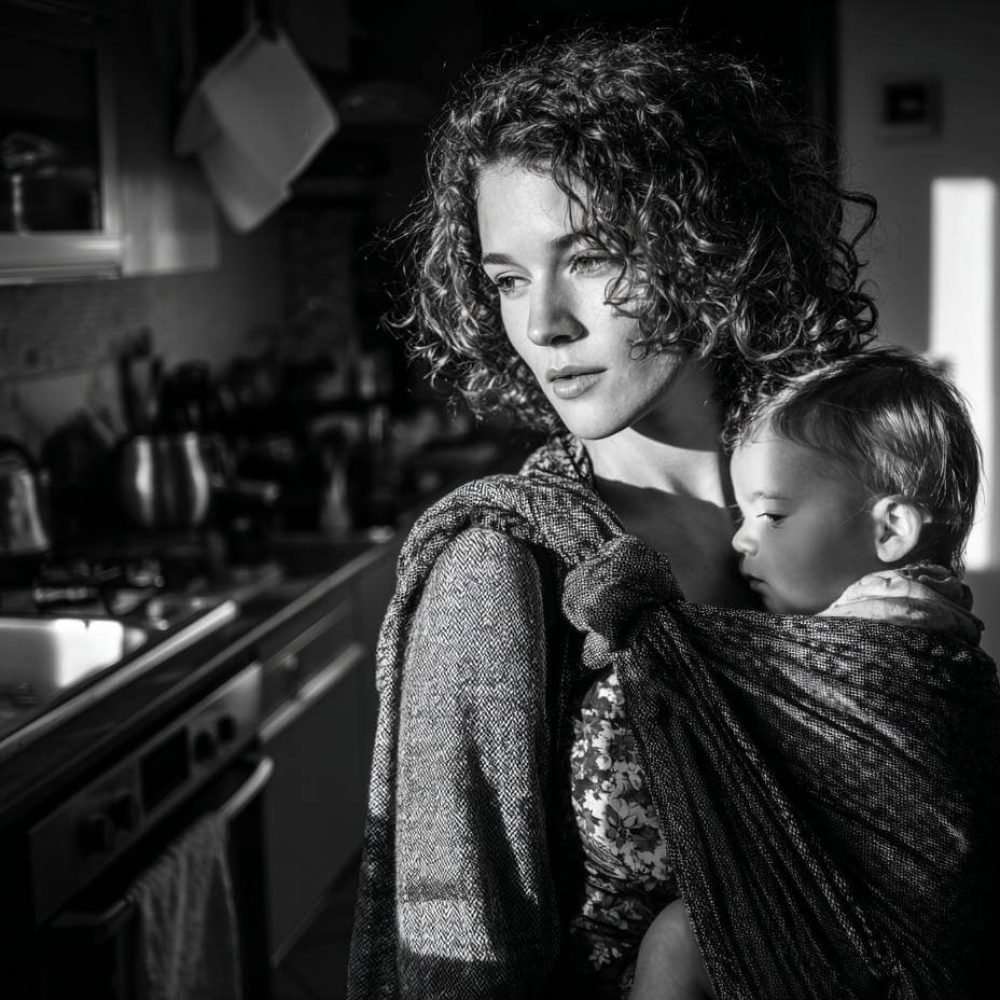
Hello, mom and dad. The other day, in a group of mothers on Facebook, I saw an outburst that broke my heart. It said something like: “My baby is going to be 2 months old and all he wants is my lap. I can't do anything, I eat lunch with him on my lap, I sleep holding him. The problem is that he only cries on his father's lap. I keep hearing the phrase ‘he won't have a lap at nursery, he'll cry, etc.”".
I read that and felt a tightness in my chest, because I've been there and you probably have too. The answer I felt like giving, and which I'm giving you now, is: take a deep breath, what you're feeling is normal. And what your baby is asking for too. No, you're not spoiling him, nor is he manipulative. The idea that “daycare will be worse” is one of the biggest myths in parenting.
What your baby is experiencing is called Exterogestation.
What is Exterogestation? The Secret Fourth Quarter
The concept, introduced by anthropologist Ashley Montagu, is simple: human gestation doesn't end at childbirth. It actually lasts about 18 months9 months inside the womb and the first 9 months outside it. This period is called exterogestation, or the “fourth trimester”.
Why are we born “premature”?
- Evolution: Humans have developed large brains and a narrower pelvis to walk upright.
- Biological Limitation: If babies stayed in the womb until they were neurologically “ready”, their heads wouldn't pass through the birth canal.
- Brain volume: A human baby is born with only 25% of their adult brain volume.
- External development: The rest of neurological, motor and emotional development takes place in your arms.
“The aim of exterogestation is not just to soothe, but to allow the baby to finish its neurological and motor development in a safe environment”.
Dismantling the Myths: What the Science Says
Myth 1: “You'll get him used to it! He'll be spoiled!”
- Saying that is like saying that you'll get a plant used to it if you water it.
- The lap is a biological need, not a treat.
- Responding to this need signals to the baby's brain that the world is safe.
- Babies who receive consistent care cry less and become more secure and independent in the future.
Myth 2: “He only cries on his father's lap. He doesn't like his father!”
- The baby has spent nine months listening to your voice and your heart; you are his natural habitat.
- It's not a rejection of the father, but a preference for the family member.
- Tip for Dad: Try skin-to-skin contact or wear a piece of clothing with the mother's scent to create familiarity.
Myth 3: “You won't have a lap at nursery school, you'll suffer a lot!”
- John Bowlby's attachment theory shows that babies with secure attachments become more confident to explore the world.
- The lap is not a crutch, it's a stepping stone to independence.
The Magic Tool: Baby Wearing
How do you meet this need and still manage to live or eat?. The answer is baby wearingthe use of baby carriers (cloth, sling, ergonomic backpack) to simulate the womb and free your hands.
Proven benefits:
- Reduces crying: Babies carried 3 hours a day cry 43% less.
- Promotes bonding: Physical contact releases oxytocin (the love hormone) in both of us.
- Stimulates development: It offers rich sensory and cognitive stimulation at adult eye level.
- Helps with breastfeeding: It facilitates free demand and helps regulate milk production.
Conclusion
If you're going through this, remember: you're not alone. What your baby asks for is vital; ignore the hunches and listen to your instinct and science. Hold your baby and feel its weight, because one day you will look back and miss even this.
References
- Montagu, A. (1986). Touching: The Human Significance of the Skin.
- DeSilva, J. M. (2011). A shift toward birthing relatively large infants early in human evolution.
- Bigelow, A. E., & Williams, L. R. (2020). To have and to hold: Effects of physical contact on infants and their caregivers.
- Cleveland Clinic (2024). 5 Benefits of Babywearing.
- Hunziker, U. A., & Barr, R. G. (1986). Increased carrying reduces infant crying.